
New Jersey is a Liminal State
Doorways and a project update.

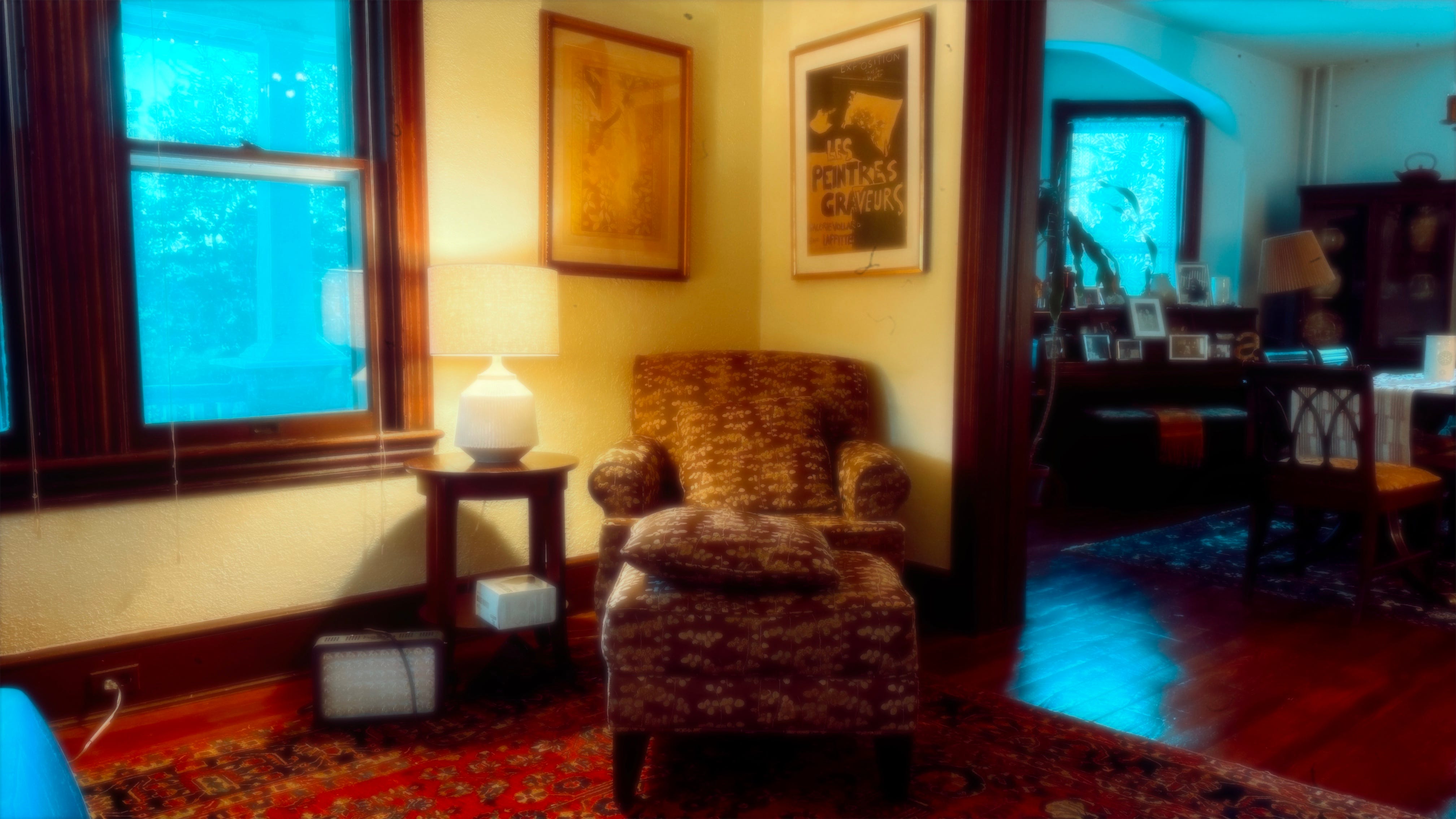
The first floor of my childhood home has more doorways than interior walls.
To move through that space is to constantly cross from one threshold to the next, to exist in a state of perpetual transition.
I’m back in LA now and have been thinking a lot about this idea of New Jersey itself as a liminal state.
Figuratively for me currently — the house is mine but not mine, the house is empty yet full, the house will soon be sold. When I’m there, it functions as a kind of cocoon from which I will emerge a new person on the other side of all of this.
But also liminal in a literal sense — New Jersey exists between New York and Philadelphia. It’s mostly suburbia, a place for gestation. People move from the city to raise their kids, the kids grow up and move back to the city.
I had really wanted to unpack the idea in this post, but it’s already way late (sorry) so I’m going to have to figure out New Jersey in a future essay (is there enough there for a whole book?? Lmk your thoughts in the comments.)
Instead, I’ll tell you about what I was doing in New Jersey over the last couple of months. I’m overdue for an update on Grief Alchemy Project, the film I’m making as part of the NonDē 50 Films Project for 2026.
If you’re new to A Woman Under the Influence, you can read my first post about the film here:
Can I Write a Memoir, but Make it Film?

Those of you who know me know that the last few years have been less than ideal for me.
Now, for the update.
After encountering a couple of hiccups with cinematographers, I found a great one and we spent the second week of February shooting at the house.
We shot on the Arri Alexa Mini LF with Leica prime lenses. I love love love the Alexa Mini for its dynamic range and the way it performs in low light.
We mainly shot interiors. Scenes of me packing things into boxes, talking on the phone, clearing out spaces. Next month I’ll shoot the strange surreal scenes where I process emotions in each room of the house.
The shoot went well, but it was a lot. Emotionally and practically, since I was directing and also producing and also in it. I’d only met my DP once before we shot, and I hired a sound person for one day who I met for the first time on set, which was also weird because the film is so personal and requires me to be quite vulnerable.
But whatever, I chose to do this so I’m doing it!
While I was prepping for the shoot, I found these two apps to definitely be worth the money: Flim1 and Cadrage.
Flim is a visual library that lets you describe what you’re looking for in any terms you want and then returns results that are way better than what you’d get from a search engine. It pulls from films, music videos, commercials, TV shows, and photos. Every image’s source is credited, and if you see something that’s close, but not quite right, you can then search for similar images.
It’s great for putting together a lookbook.
Sometimes I’ll have shots from specific films in mind that I know that I want to reference, but other times I have an idea in my head and then need to find the right image to match it.
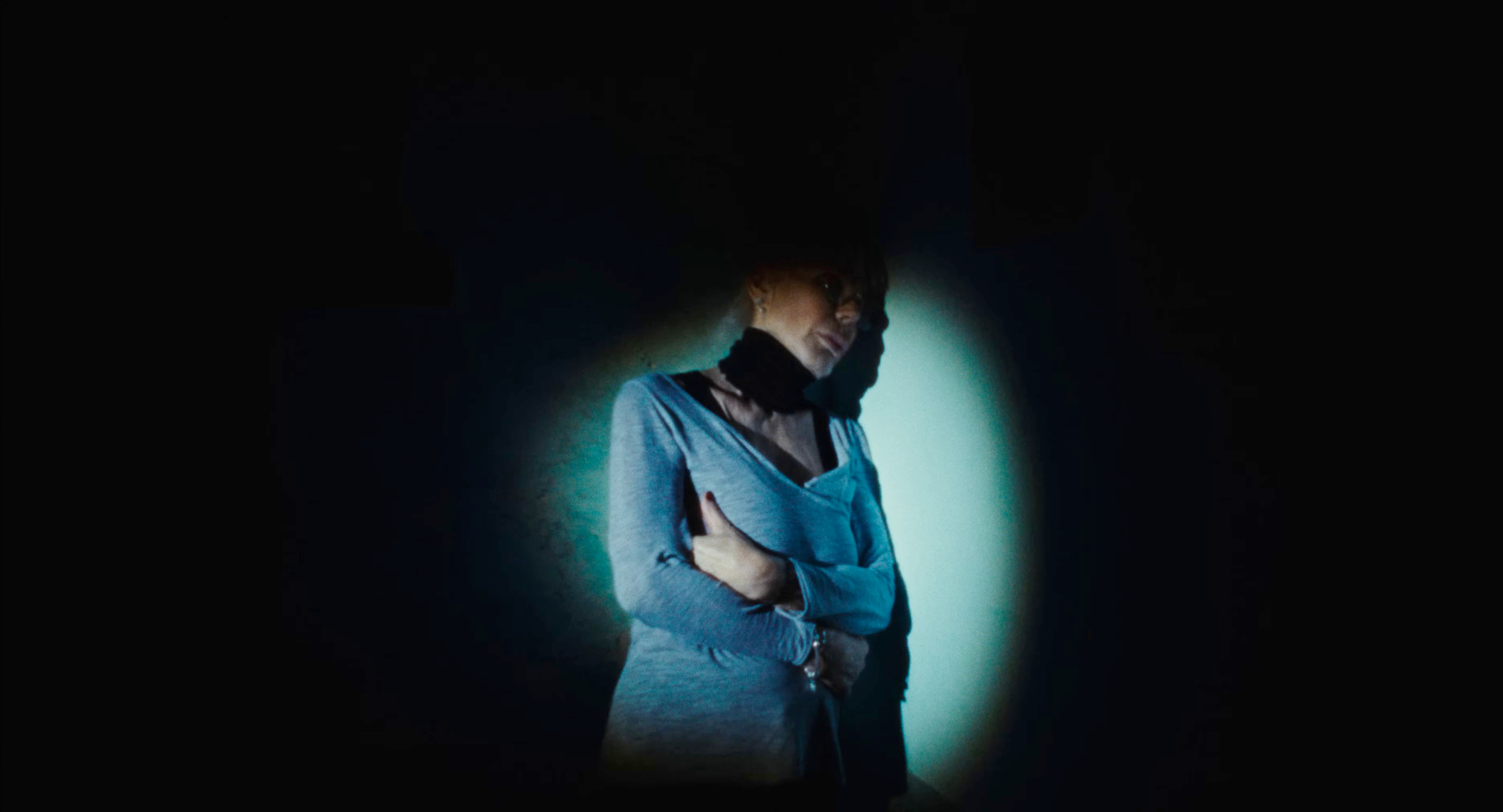
Like I have a shot in mind for one of the scenes I’ll shoot in April, but I couldn’t think of a film to pull it from. It’s something like this, which I found by typing “a woman in a dark basement with a spotlight shining on her” into Flim’s search bar:
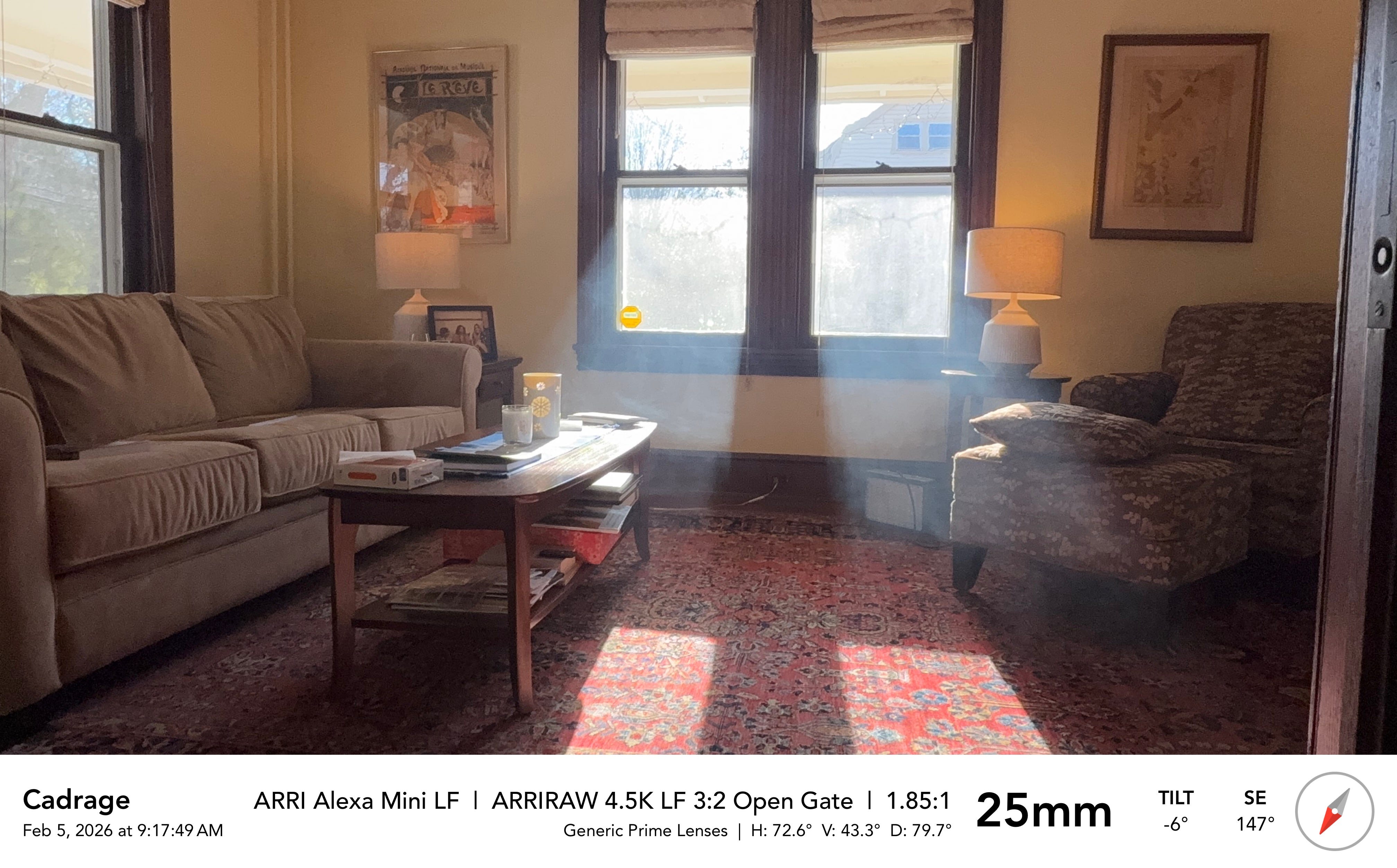
Cadrage turns your phone into a director’s viewfinder so you can create and export a PDF of your shotlist — complete with photos — directly from the app and visualize your framing on set. It comes with a bunch of different camera package and lens settings so it’s customizable. It’s very intuitive to use, and embeds all of the essential information — camera, lens, aspect ratio, field of view, bearing, location, date — into the image file.
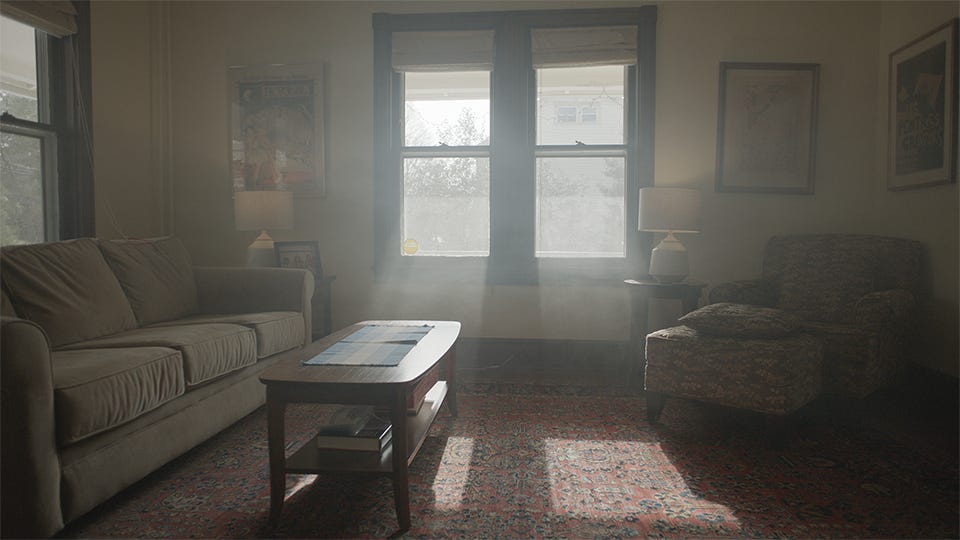
Since I was living in my location, this app was especially great. I spent a couple of days before the shoot observing the house at different times of day and trying out framing possibilities, and found it to be quite accurate during production.
Here’s a test shot from Cadrage:
And here’s a still from the footage we shot (obviously not color corrected):
I also shot some Super 8 film myself.
I rented a Canon 1014 xls from a place called Du-All Camera in North Jersey because I couldn’t find any rental houses in the Philly area that carried them.
I liked the camera and would rent it again. One thing to note for next time is that the motor locks up in really cold weather. I shot a couple of rolls outside in the dead of winter and at one point the camera stopped working.
It had been a really long time since I’d shot Super 8 and I forgot how many things you have to remember to do when you’re not just shooting on your iPhone.
I didn’t check the gate (ever) and you can see in the third shot below there’s a scratch running down the left side, so I guess at some point something got in there. But whatever, the beauty of Super 8 lies in its imperfections.
The footage above is Kodak Vision3 500T (again not color corrected.)
Since I couldn’t find anywhere in the Philly area to process and scan my film, I sent it back to Pro8mm in Burbank and it was ready for me when I got back to LA. I did the full format overscan (the above export was cropped to 1:85) at 4K with the DPX codec.
The different file formats will be kind of a big B in post, but I have made peace with that. I am a perfectionist and I want the film to look as good as it possibly can.
Overall, I’m really happy with everything I’ve shot so far.
Now I need to prep for April. It’s gonna get weird. I can’t wait.
Until next time,
Tara
I did the monthly plan and will cancel once I’m finished pulling images. It’s worth it for the visual research but too expensive to just continue to have it.
NJ as a liminal state is instantly recognizable (to me) as a clear and rich concept -- I vote run with it! And congrats on bringing your vision to life!! Vulnerability and all.
"We, who bear the coolness of the forever uncool." —The Boss ~ https://njmonthly.com/articles/jersey-living/we-are-a-confused-but-noble-race/#:~:text=And%20on%20the%20beach%20there's,electric%20light%20with%20your%20day?